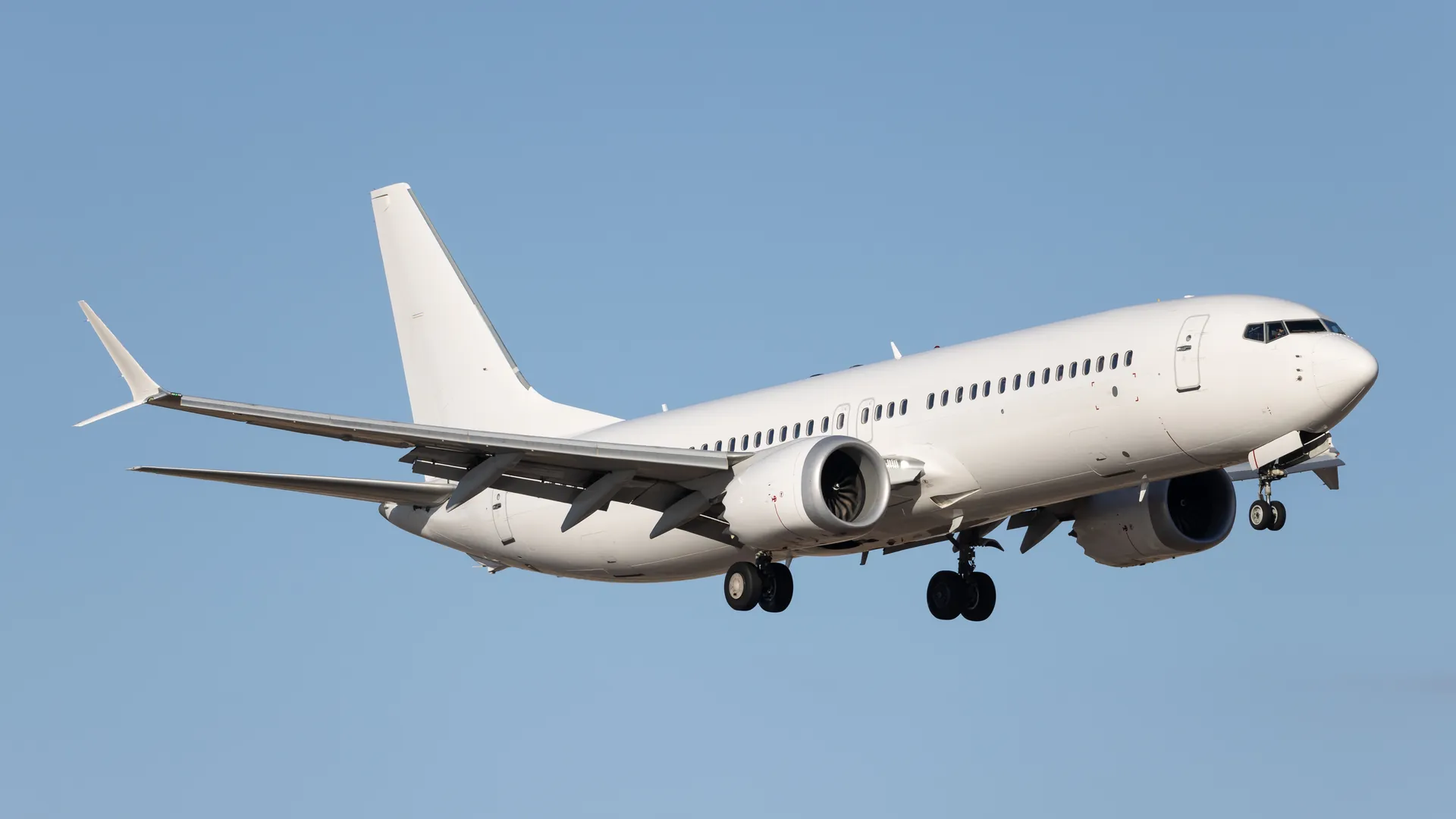
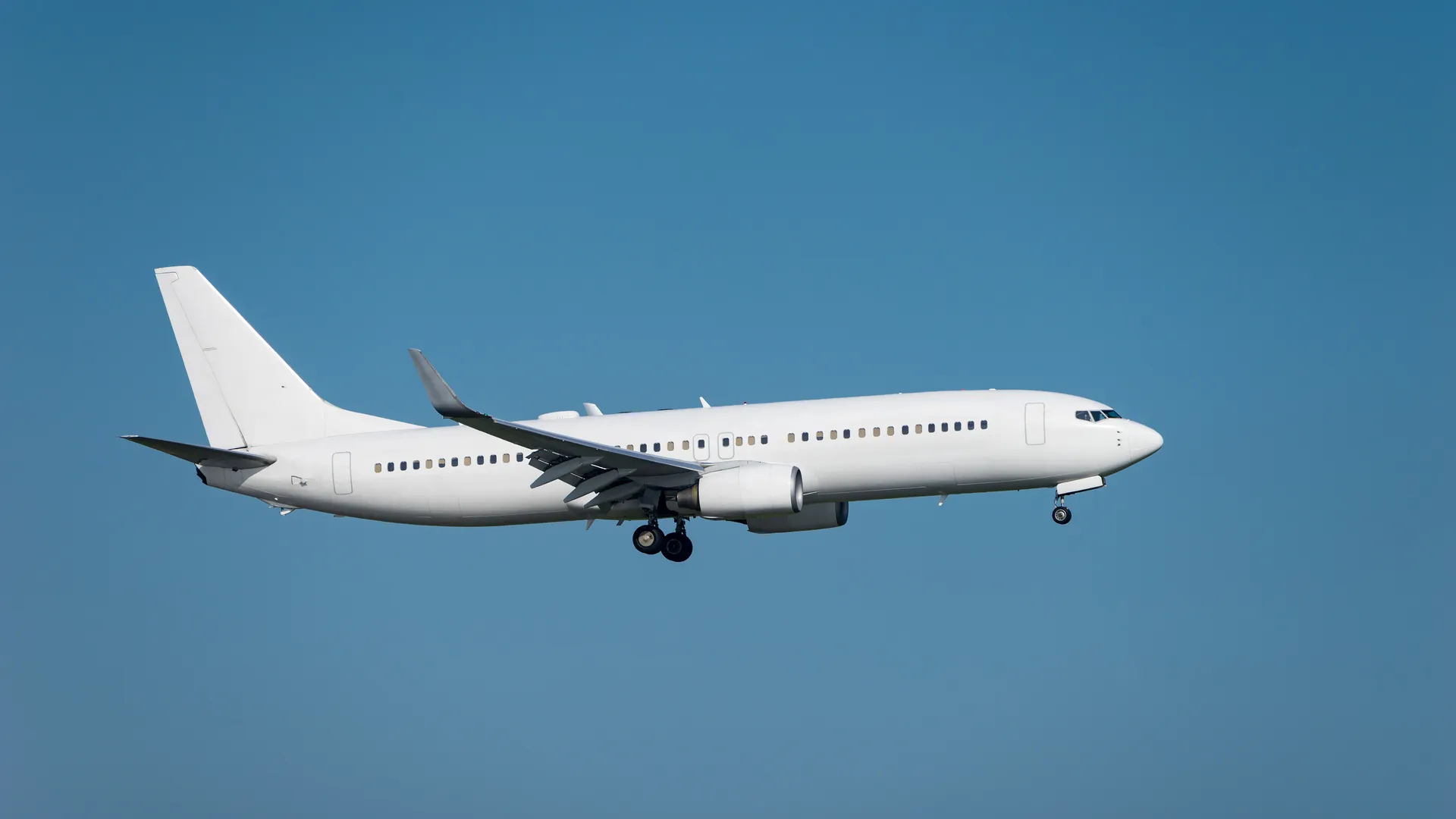
The longest aircraft in the A320 family, the Airbus A321 comes in three recent versions: neo, LR and XLR. It typically accommodates 180 to 220 passengers in two classes, and up to 244 in a single-class configuration. Depending on the version, it can fly approximately 6,500 to 8,700 km nonstop.
For charter flights, we recommend it for medium-haul group travel and, in LR or XLR versions, for longer routes. We check the available version, its cabin configuration and the actual range required for your journey.
Passengers
180 to 220
In two classes; up to 244 in a single-class configuration.
Range
6,500 to 8,700 km
Depending on the version (neo, LR or XLR) and payload.
Cruise speed
Mach 0.78
Typical cruise speed.
Baggage hold
Approximately 52 m³
Without additional fuel tanks; less capacity on LR and XLR versions.
An A321 is chartered on a quotation basis: the price depends on flight time, aircraft positioning and airport charges. Ground handling and potential crew accommodation costs also apply when the aircraft remains at the destination. For a return flight over several days, keeping the aircraft on site or repositioning it can significantly affect the budget.
The version also influences the price: an A321neo is sufficient for most European flights, while an LR or XLR serves longer routes. To find out the price of your flight, request a personalised quote.
The A321 can transport a large group while retaining the operating economics of a single-aisle aircraft.
Its capacity suits many seminars, tours and supporter trips without splitting the group (why charter an airliner).
Its single-aisle format allows it to serve regional and secondary airports unsuitable for wide-body aircraft.
The neo covers Europe and the Mediterranean, while the LR and XLR enable transatlantic routes.
With many A321s operating across Europe, an aircraft may be available closer to your departure airport.
Its main limitation is the baggage capacity of a single-aisle aircraft. For groups carrying significant equipment, we check available volume and weight before confirmation.
According to Airbus, the A321neo can fly approximately 6,500 km, the A321LR around 7,400 km and the A321XLR up to 8,700 km. These ranges are partly achieved through different fuel capacities across the three versions.
These reference figures vary according to payload, winds and regulatory fuel reserves. We therefore have each route validated by the operator.
From Paris Charles de Gaulle, Marrakech, approximately 2,100 km away, and Dakar, around 4,200 km away, remain within A321neo range. A Paris–Montreal flight of approximately 5,500 km generally requires an LR or XLR, depending on the payload carried.

All three versions share a 44.51 m fuselage length and a 35.80 m wingspan, as well as the same engine options. They can be powered by CFM LEAP-1A or Pratt & Whitney GTF engines.
The LR adds auxiliary fuel tanks in the hold. The XLR features a permanent rear centre tank and a higher maximum take-off weight.
| Version | Passengers (2 classes) | Range (approx.) | Maximum take-off weight | Additional fuel |
|---|---|---|---|---|
| A321neo | 180 to 220 | 6,500 km | up to 97 t | – |
| A321LR | 180 to 220 | 7,400 km | up to 97 t | Auxiliary tanks in the hold |
| A321XLR | 180 to 220 | 8,700 km | 101.5 t | Rear centre tank (approximately 13,000 l) |
Sources: Airbus, A320 Family page, A321XLR page and Aircraft Characteristics A321. Reference values.
Airbus states a capacity of 180 to 220 seats in a two-class configuration and up to 244 passengers in a single-class layout. This maximum is partly determined by the aircraft's emergency exits. The cabin has a single aisle, typically with six seats abreast in economy.
For charter flights, actual capacity depends on the aircraft available. An all-economy A321 does not offer the same capacity as an aircraft featuring business class. We therefore provide the exact number of seats in each class before confirmation.
An A321neo provides approximately 52 m³ of usable baggage volume, divided between containers and bulk-loading areas. The additional fuel tanks fitted to LR and XLR versions reduce the space available for baggage.
For groups carrying sports or technical equipment, we therefore confirm the aircraft version and baggage allowance directly with the operator.
A321 aircraft offered for charter retain their operator's cabin, either all-economy or with business class, depending on the airline. We provide the cabin plan so you can organise your group before signing the charter agreement.
| Charter mission | A321 suitability | Our analysis |
|---|---|---|
| Group of 150 to 220 passengers in Europe or the Mediterranean | Suitable | One aircraft can transport the entire group, including from certain regional airports. |
| Sports team or supporters | Suitable | Suitable for short rotations; baggage capacity for equipment must be confirmed (sports charter). |
| Seminar or incentive trip to North Africa or the Middle East | Suitable | These distances are generally within the range of an A321neo (our group charter missions). |
| Transatlantic group flight | To be assessed | Possible with an LR or XLR depending on the route, payload and aircraft availability. |
| Group of more than 240 passengers | Limited suitability | An A340, A350 or two aircraft provide greater passenger capacity. |
| Group of fewer than 100 passengers | Generally oversized | A CRJ900 may provide a more economical solution. |
| Cargo-only operation | Not suitable | The cargo version, the A321F, should be considered instead. |

We consider the A321 when a group exceeds regional jet capacity without requiring a wide-body aircraft. It often provides a good balance between seating capacity, airport choice and budget.

We check the proposed version, whether neo, LR or XLR, because it directly affects range and available baggage capacity. We also review the cabin plan, baggage allowance, operator licences and aircraft positioning costs.

On longer routes, additional fuel can reduce the payload available for passengers, baggage and equipment. Slots at congested airports during peak periods and crew rest requirements also require advance planning.

For fewer than 150 passengers, a Boeing 737 may often be sufficient. Above 240 passengers, we generally compare the available options with an A340 or A350.
These alternatives can also become relevant when the group carries significant equipment on a long-haul route.
As part of a tender, we organised air transportation for a corporate seminar between Paris and Istanbul on behalf of a travel agency.
Transport 210 participants together on both outbound and return flights, while making the flight part of the seminar experience.
We proposed an A321LR capable of accommodating the entire group on a single flight.
We organised the return flights, transfers between the airport and hotel, and catering agreed with the client. Onboard activities also allowed the seminar to begin immediately after take-off.
The agency had a single point of contact coordinating both air travel and ground transportation. The seminar programme could therefore begin before the group even arrived in Istanbul.
This example illustrates what a charter flight can provide when air travel forms an integral part of an event.
Provide your dates, airports, passenger numbers and expected baggage. The distance determines whether your flight requires a neo, LR or XLR.
We contact operators and present the available A321s, including their version and cabin configuration.
Once the charter is confirmed, we coordinate every stage with the operator and airports until your group's return.
We do more than find an available aircraft. From your first request to landing, our teams coordinate every stage of your charter.
Your dedicated broker remains your main point of contact throughout your journey, from the initial request to your arrival.
We compare aircraft and certified operators to recommend the solution best suited to your itinerary, requirements and budget.
Once your flight is confirmed, our Flight Preparation team coordinates the operational details required for a smooth journey.
The team oversees flight logistics, ground handling, catering, passenger requirements and other arrangements before departure.
Every flight is operated by a certified aircraft operator holding the licences and approvals required for the mission.
We review operators, aircraft and operational requirements to check that each proposed solution meets our safety and compliance standards.
There is no fixed charter price: the cost depends on flight time, aircraft positioning and airport charges. Keeping the aircraft at the destination can also affect the budget. We prepare a quotation based on your dates and route.
An A321 typically accommodates 180 to 220 passengers in two classes, and up to 244 in a single-class configuration. The exact number depends on the cabin of the aircraft offered, which we provide before signing.
Distance is the main consideration. The neo covers Europe and the Mediterranean, while the LR and XLR serve longer routes. Their additional fuel capacity can, however, reduce the space available for baggage.
Yes, with an LR or XLR, depending on the route, payload and aircraft availability. We have the operator confirm nonstop feasibility before proposing the aircraft for your charter.
The baggage allowance depends on the A321 version and operator. For bulky equipment, we check the available hold volume and weight capacity before confirming the charter.
Yes, the A321 is suitable for transporting a team, its staff and potentially supporters. We also check the requirements for carrying sports equipment as part of your charter.
The A321 can carry more passengers, while a Boeing 737 may be sufficient for a smaller group. We compare both aircraft when available to identify the most suitable solution.
The earlier you enquire, the greater the choice of available aircraft, particularly during periods of high demand. Send us your dates as soon as your charter project becomes more defined so we can assess availability.
From private jet charters to commercial group flights and dedicated cargo operations, we deliver tailored air solutions for every mission, anywhere in the world.